


Iranian Women’s National Team Players Granted Asylum in Australia
Table of Contents
How did we get here?
Recently, several players from Iran’s women’s national football team sought asylum while they were in Australia for the Asian Cup. The situation developed after controversy surrounding the team’s refusal to sing the Iranian national anthem. This act was widely interpreted as a protest, and reports suggested that some of the players were labelled “traitors” back home, with accusations that such actions could amount to treason.
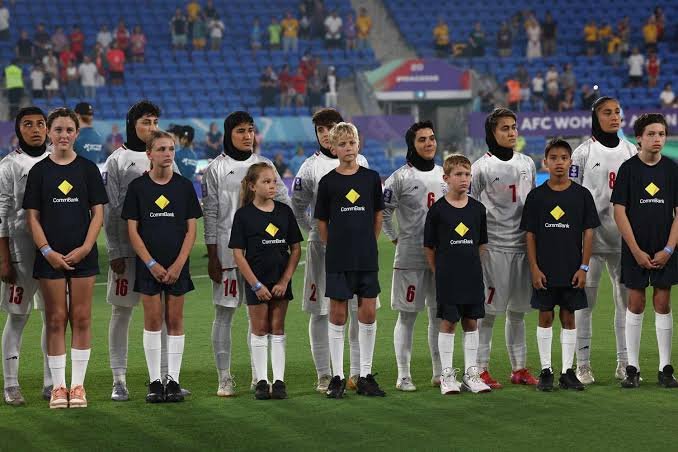
For the players involved, this created a serious fear about returning to Iran. There were also concerns about the potential consequences for their families. Among the players mentioned were Fatereh Pasandiden, Zatira Ghanbari, Zahra Sabali, Atefeh Banazanzaden and Monce Hamoud.
As the situation unfolded, Australian authorities moved the players to what officials described as a “safe location.” Their movements were heavily restricted for security reasons. They were unable to walk around freely, and escorts accompanied them to meals and other activities. At times, they even ate separately in a conference room rather than in public areas.
Australia’s Immigration Minister Tony Burke addressed the situation publicly, saying the players were “welcome to stay in Australia.” He emphasised that they were safe and should feel at home while their situation was being processed. He also indicated that if other members of the team sought protection, they could be given the same opportunity.
Police also reportedly made efforts to create what they described as “the maximum amount of opportunities” for help and support to be provided to the players while the government worked out how to respond.
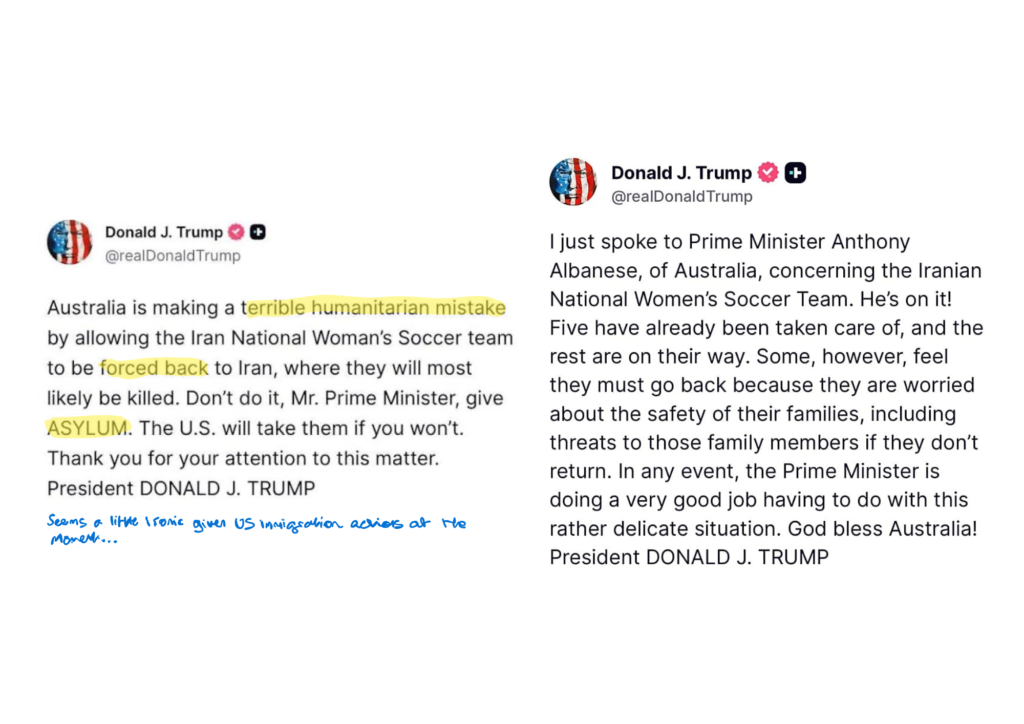
Interestingly, the situation also drew attention internationally. U.S. President Donald Trump publicly praised the Australian government for its response and even suggested that the United States would be willing to take the players in if necessary. This comment stood in contrast to the U.S. government’s decision in other cases to deport Iranian groups back to Iran.
Australia’s Controversial Immigration and Asylum Laws
To understand why this situation has attracted so much attention, it helps to look at how Australia’s asylum system normally works.
Under the Migration Act 1958, asylum seekers who arrive in Australia without a valid visa must be placed in immigration detention. This rule applies whether someone arrives on the mainland or in what the law calls an “excised offshore place.” Unlike in many other countries, immigration detention in Australia can be indefinite.
Over the years, thousands of asylum seekers have been held in closed detention centres. Since 2012, Australia has also sent some asylum seekers to offshore processing centres in places such as Nauru and Papua New Guinea rather than allowing them to remain in Australia while their claims are assessed.
The system has become even more controversial in recent months because of new legislative proposals currently being prepared by the government. One proposal would allow the immigration minister to issue what is known as an “arrival control determination.” This would give the government the power to prevent certain groups of visa holders from travelling to Australia without needing to pass new legislation.
The proposal has been partly linked to the situation in the Middle East. According to immigration authorities, there are around 7,200 Iranian nationals who currently hold temporary Australian visas. The new measures could potentially limit their ability to travel to Australia or remain in the country if conditions change.
Critics have strongly condemned the proposed legislation. The chief executive of the Asylum Seeker Resource Centre described it as “truly appalling,” arguing that it sends a disturbing message about who is considered worthy of protection. The Refugee Council similarly warned that the bill represents “another step towards ending access to asylum in Australia.”
Another issue raised by critics is that some asylum claims may be assessed through a non-statutory process rather than through the formal system set out in the Migration Act. This means fewer procedural safeguards may apply, which could make it harder for applicants to challenge decisions.
So Why Let the Players Stay?
Given how strict Australia’s asylum policies usually are, the government’s response to the Iranian footballers stands out. So why were these players welcomed so openly?
Part of the answer is the public story surrounding them. Their refusal to sing the national anthem was widely seen as an act of courage, especially considering the possible consequences they might face if they returned to Iran. Political figures praised the players for their bravery, and there was significant sympathy for them both in Australia and internationally.
Allowing them to stay also creates positive publicity for the Australian government. At a time when it is preparing to introduce legislation that critics say could make the asylum system even harsher, the decision to protect these players sends a much more compassionate message.
In other words, the government can present itself as supportive of individuals who are seen as standing up for their beliefs. The story of young athletes seeking safety is far easier for the public to rally behind than the broader and more complicated debates around asylum policy.
However, this has also led to accusations of inconsistency. Some critics argue that welcoming the footballers while simultaneously tightening asylum laws for others sends mixed signals. If the government is willing to protect these players, they ask, why are other asylum seekers treated so differently?
Ultimately, the case highlights the tension at the heart of Australia’s asylum system. On the one hand, there is a strong desire to control immigration and limit access to asylum. On the other hand, highly visible cases like this one—especially when they involve athletes, political protest, and international attention—can push governments to act more sympathetically.
For now, the Iranian players have been told that they are safe in Australia. But their story has also reopened a much larger debate about who gets protection, and why.
Pressure All Around
Since the initial reports that several members of the Iranian women’s team wanted to stay in Australia, the situation has developed. Although seven players and staff members were originally granted humanitarian visas after seeking protection, not all of them ultimately decided to remain.
In the days that followed, several members of the group chose to withdraw their asylum requests and return home. Some travelled first to Kuala Lumpur to reunite with the rest of the team before continuing on to Iran. At least five of those who had initially accepted the offer of protection have now left Australia, meaning only a small number of the original group remain in the country.
Australian officials said the players were given time and space to consider their options and were able to make their own decisions. However, the reversals have also raised concerns among activists and members of the Iranian diaspora, who worry that pressure or fear for family members back in Iran may have influenced some of the players’ choices.
The change in course highlights how complicated the situation is for the athletes involved. Even after being offered protection, deciding whether to stay abroad or return home involves weighing personal safety against the potential consequences for their families and futures.
Help today
Click this link to learn how you can help push for change in the face of conflict